
The Predator Raw Diet for Dogs: A Journey to Primal Nutrition

The Predator Raw Diet for Dogs: A Journey to Primal Nutrition
There’s been a lot of buzz lately about how commercial kibble might not be the best for our dogs, not because of the ingredients necessarily, but because of the ultra-high-heat processing that can destroy some of the nutrients. A quick search pulls up plenty of articles on this, like this one from PledgeCare, which digs into how high temperatures strip away some of the good stuff in pet food. I won’t dwell on that here, but it got me thinking about better options for my 65-pound American Bully.
Quick note up front: I’m a dog owner sharing what worked for my two dogs, not a veterinarian or a pet nutritionist. Raw feeding has real benefits but also real responsibilities around nutritional balance and safe handling, which I’ll be honest about throughout. Please read the whole thing, especially the safety section, and talk to your vet before you switch your dog’s diet.
Exploring Alternatives
Curious about alternatives, I looked into freeze-dried foods like Dr. Marty’s and refrigerated options like The Farmer’s Dog. They sounded great, but for a big dog like mine, the costs added up fast, way too pricey for the long haul. Many of these pre-made foods also include fruits and vegetables, which I wasn’t convinced my dog needed.
That question, whether dogs need plant matter, turns out to be one of the real dividing lines in raw feeding. There are two main camps: BARF (Biologically Appropriate Raw Food), which includes vegetables, fruit, and seeds, and PMR (Prey Model Raw), which is meat, bone, and organ only, no plants. The research doesn’t strongly favor one over the other, and reasonable people land on both sides. I went with the prey model approach, sometimes called the predator raw or prey raw diet, because it fit my thinking and my budget. If you’re convinced plants add value, BARF is just as valid, and arguably a little easier to balance.
Predator Raw Diet Composition
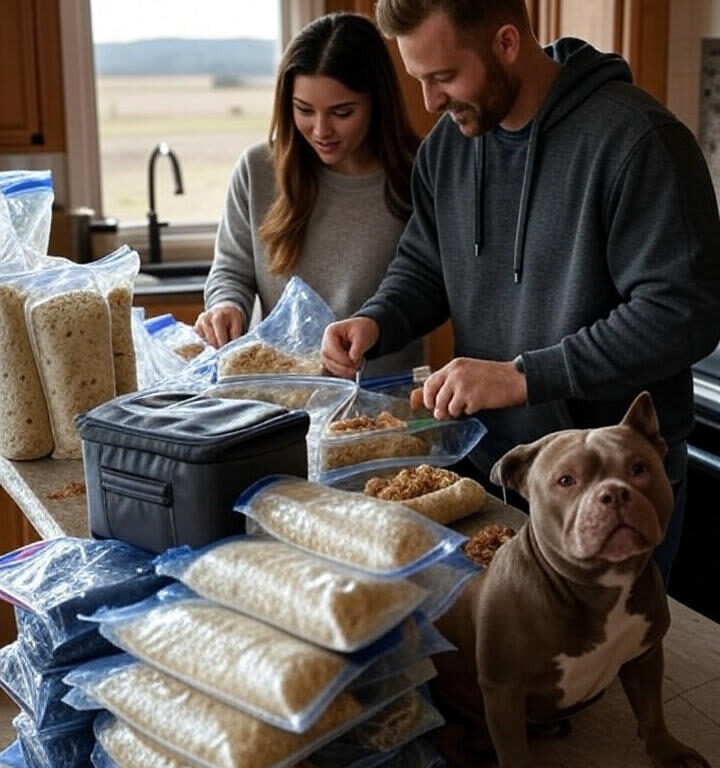
The prey model diet is about feeding dogs the parts of a whole prey animal: raw meat, bones, and organs. The widely used PMR guideline is roughly 80% muscle meat, 10% edible bone, 5% liver, and 5% other secreting organs (often written 80/10/10). My version runs a little more muscle-heavy, closer to 85/10/5, which is a recognized variation. My diet has also evolved since I first wrote this, so here’s how I actually feed it today:
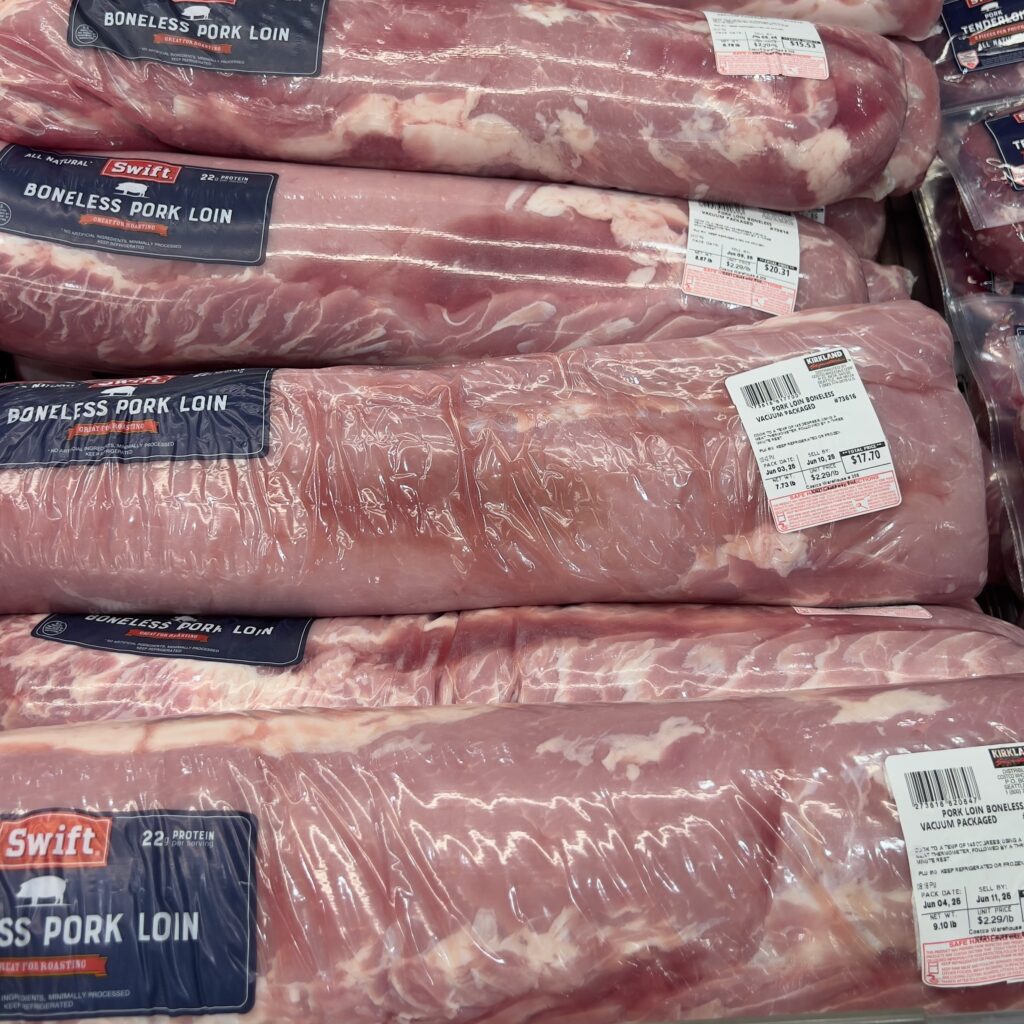
- Muscle Meat: Pork loin is my base. I buy large, affordable cuts from my local warehouse store and portion them out (roughly $2.29/lb and good quality). I use pork because my Bully has chicken allergies, which are apparently common with the breed. About 20% of the muscle-meat portion is now canned salmon (I use Black Top Premium Wild Alaska Pink Salmon), which also brings edible bone and omega-3s, and I rotate in a bit of raw hamburger a couple times a week. That gives me three protein sources instead of one, which matters: variety gives a broader micronutrient spread and helps cover gaps a single protein can’t. The beef adds zinc and the salmon adds omega-3s and vitamin D, both useful in a raw diet.
- Organ Meat: I use liver for the organ portion. I’ve actually switched from raw liver to freeze-dried beef liver (I use Canature Nutribites) for one very practical reason: raw liver smells terrible, and freeze-dried is far easier to handle and store, especially in a truck. My dogs go crazy for it either way. One honest note: the full PMR model calls for 5% liver plus 5% of a second secreting organ like kidney or spleen. Liver covers vitamin A, but that second organ provides minerals liver doesn’t, so adding kidney or spleen is on my list, and I’d tell anyone starting out to plan for both from the beginning.
- Bones: The canned salmon provides edible bone content, which is great for calcium.
- Salmon Oil: I add a bit of salmon oil (I use StrellaLab Wild Alaskan Salmon Oil) for my Bully for the extra omega-3s and coat health. I do not give it to my Chiweenie, because he has fatty liver issues and I keep his added fat down. That’s a good example of feeding to the individual dog (more on that below).
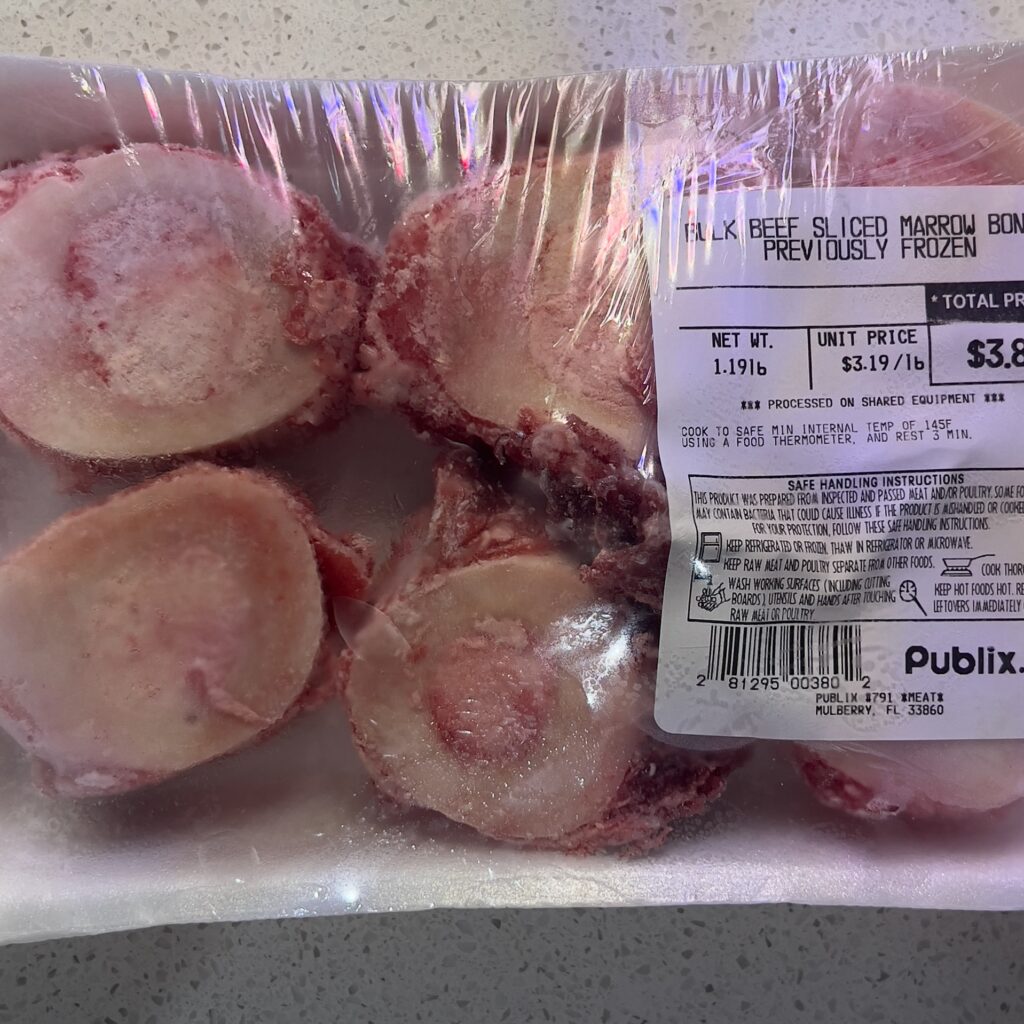
- Bone Broth: I make my own by pressure-cooking marrow bones with a tablespoon of vinegar and enough water to cover. It’s nutrient-rich and easy to store. (Cooking the broth removes the concerns about broken teeth, gut perforation, and bacteria that come with feeding hard cooked bones. Never feed cooked bones directly.)
- Freeze-Dried Blueberries: I add these daily, about 3 per 10 lbs of dog, so my 20 lb Chiweenie gets 6 and my 60 lb Bully gets 18. The idea came from a post I read suggesting that a compound in blueberries helps protect the nutrients in bone broth as they move through digestion, so more of the joint-health benefit actually gets absorbed. Full honesty: this is my personal anecdote, not something I can prove. I think I’ve seen better mobility, but I can’t say for certain the blueberries are the reason. Take it or leave it.
- Probiotic: Completely optional, a dog-specific probiotic for gut support. I occasionally use Purina Pro Plan FortiFlora.
A quick but important note on feeding to the individual dog: my two have different needs, and the Chiweenie’s fatty liver issue is exactly why he doesn’t get the salmon oil. If your dog has any health condition (liver, kidney, pancreatitis, allergies, and so on), that’s a real reason to run the specific diet, including organ meats like liver, past your vet before you start. What’s right for one dog isn’t automatically right for another.
The One Thing I Want You to Take Seriously: Nutritional Balance
Here’s the honest tradeoff with prey model raw, and it’s the thing my vet specifically raised. PMR is closer to a dog’s ancestral diet, but it’s harder to get complete trace-nutrient balance without paying attention. The nutrients most often short in a DIY raw diet are zinc, manganese, iodine, and vitamin E. That’s not a reason to avoid raw. It’s a reason to do it deliberately, use variety, include that second organ, and ideally run your plan past a vet or a veterinary nutritionist to check for gaps. A raw feeding calculator can help you sanity-check your ratios and portions too.
I’m not sharing this to scare anyone off. I’m sharing it because if I’d understood the zinc/manganese/iodine/vitamin E gap on day one, I’d have planned for it sooner. Consider that my gift to you.
Safety and Handling
Raw feeding carries a genuine bacterial risk (salmonella, E. coli, listeria) for both your dog and the humans handling the food. This matters even more in a truck, where prep space and handwashing are limited. A few rules I follow:
- Use quality meat and keep your prep surfaces and hands clean.
- Freeze meat for at least 3 weeks to kill potential parasites before feeding.
- Keep raw food properly cold, and don’t let it sit out.
- One important caveat: the FDA and AVMA recommend against raw feeding in homes with immunocompromised people. If someone in your household is vulnerable, this is a real conversation to have before you start.
My Journey and Vet Input
Before starting, I talked with my veterinarian. I’ll be honest that I go in with a healthy dose of skepticism about how much of the pet-food and pharmaceutical world is driven by profit, so I like to research things myself and ask a lot of questions. That said, my vet’s input mattered. She didn’t object to the raw diet, but she recommended consulting a veterinary nutritionist to make sure it’s balanced, which, after doing the research, I think is genuinely good advice. Skepticism and listening to your vet aren’t mutually exclusive, and on the balance question, she was right.
Why I Chose This Path
The prey model diet feels right for my dog. It’s closer to what nature intended, and it cut out processed kibble and fillers. I’ve seen my dog thrive: shinier, softer coat, more energy, and better joint movement. It’s not without challenges. It takes time to prep, costs more than basic kibble, and requires careful handling. But for me, the benefits have outweighed the effort.
Tips for Getting Started
- Start Slow: Transition over 7 to 10 days, mixing raw with your dog’s current food to avoid stomach upset.
- Source Smart: Look for affordable, quality meat from warehouse stores or local butchers.
- Balance It Out: Use the PMR ratio as your guide (roughly 80/10/5/5), include a second organ, and lean on variety across proteins. Check your plan against a raw calculator or a nutritionist.
- Mind the Micronutrients: Pay attention to zinc, manganese, iodine, and vitamin E, the usual gaps in DIY raw.
- Handle Safely: Freeze meat 3+ weeks, keep everything clean, and mind the immunocompromised-household caveat.
- Watch Your Dog: Monitor energy, stools, and overall condition, and adjust as needed.
- Talk to Pros: I’m not a professional and this isn’t professional advice. Do your own research and check with a vet or veterinary nutritionist to make sure your dog’s diet is complete.
Conclusion
The prey model raw diet isn’t for everyone, but it’s been a real positive for my American Bully and my Chiweenie. It’s affordable compared to pre-made raw foods, it aligns with a dog’s carnivorous roots, and done carefully, with attention to balance and safety, it’s kept both my dogs in great shape. I’d been feeding it for 3 months when I first wrote this in June 2025.
UPDATE 5/31/2026 – I’ve now been feeding this diet to both dogs for over a year. They have more energy, and my Bully trimmed down about 5 lbs of fat and is as soft as velvet, a svelte machine now. The Chiweenie dropped about a pound of fat and has a noticeably softer, shinier coat.
Curious how I prep this for life on the road? Take a look at my truck meal planning article, where I get into how I handle it in the truck. And if you’re working on your own health alongside your dog’s, you might enjoy my posts on intermittent fasting and staying awake and alert on the road.
If you’re looking for a carrier that values compliance and treats its drivers right, schedule a call with M2GT and let’s talk about what we can offer you. You can also visit our Owner Operator page for more information.
If you enjoyed this article, please check out our other stories from the road and our Trucking 411 articles — Keep the Shiny Side Up!