Truck Meal Planning: Feeding Two People and Two Dogs on the Road

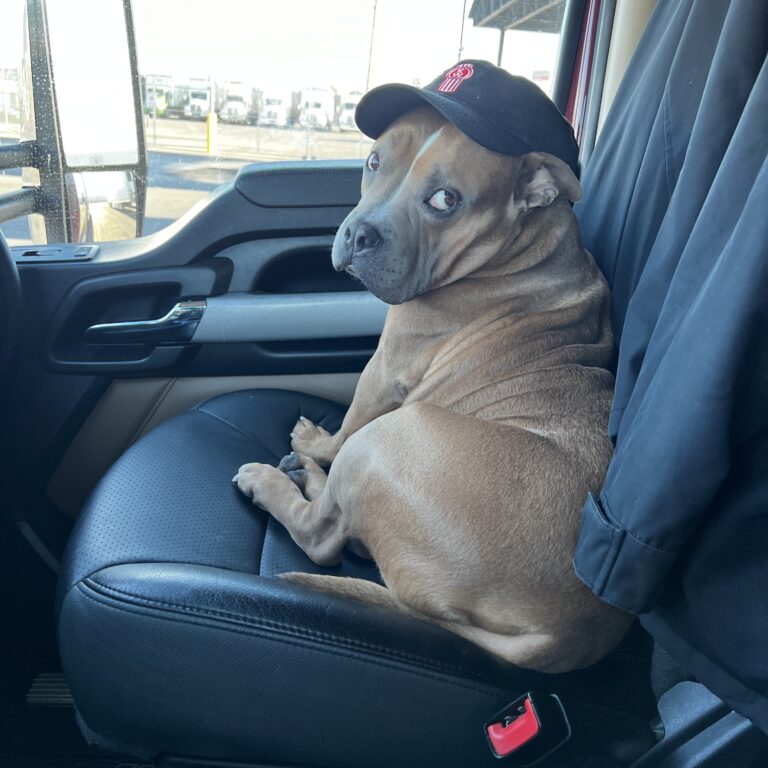
As over-the-road truckers, my husband and I are out for about 10 days at a stretch. Our two road dogs, Thumper (our American Bully) and Rocky (our Chiweenie), ride along too. Truck meal planning for the four of us is a critical part of our routine. It keeps us healthy, saves money, and helps us manage limited space. Here’s how I plan and prepare meals for life on the road.
Human Meals: Smart Prep for Small Spaces
Our truck has a compact built-in fridge with a freezer about the size of a shoebox, so space is tight. We also use a soft-sided cooler with ice packs for extra storage. To make the most of it, I focus on versatile, space-saving foods:
- Frozen Convenience Foods: I stock up on easy items like breakfast sandwiches, burritos, and other small frozen meals that fit our tiny freezer and are quick to heat.
- Pre-Cooked Proteins: I prepare chicken thighs, hamburger patties, and pot roast at home, vacuum-sealing them for freshness and space efficiency.
- Mix-and-Match Sides: I cook pasta and rice in advance. I pair them with a veggie blend of red peppers, onions, garlic, mushrooms, and spinach for quick, nutritious meals.
- Breakfast: I prep breakfast burritos ahead of time, wrap them in wax paper, and freeze them. To keep things interesting, I vary the fillings with different meats, veggies, and cheeses. Our mornings stay flavorful and far from boring.
- Shelf-Stable Staples: Ramen, canned chili, sandwich bread, and snacks round out our options for variety and convenience.
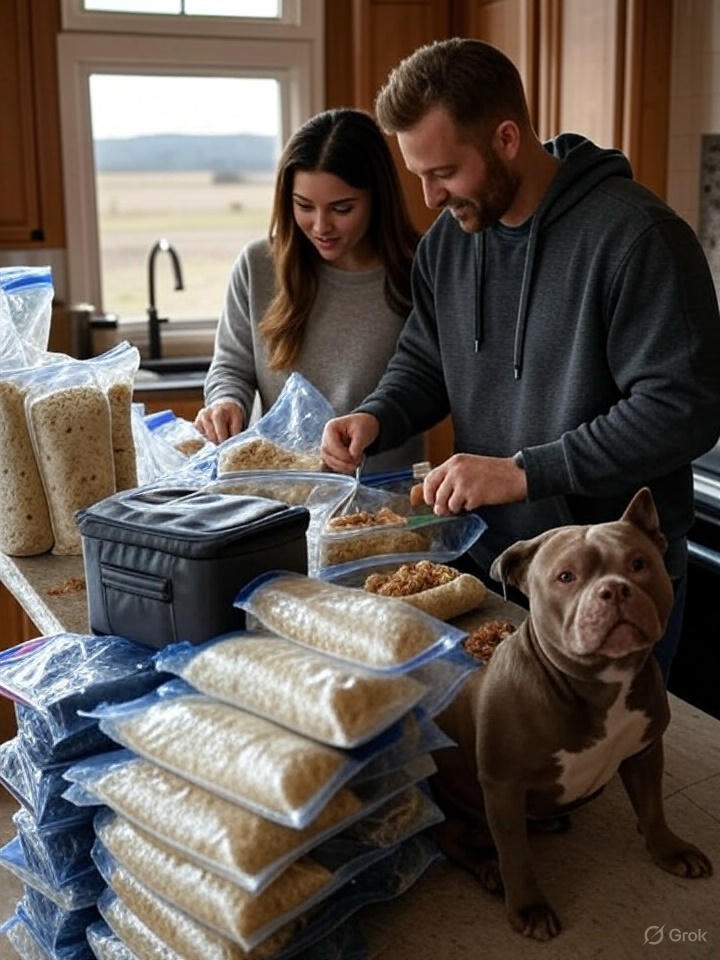
When I’m home, I cook in bulk and vacuum-seal leftovers in flat bags to maximize storage. In the truck, we rely on a microwave and a Ninja Crispi. It gives us the flexibility to reheat, air-fry, or even bake. Truck stops offer plenty of fast food, but we prioritize our prepped meals. It helps with portion control and healthier eating.
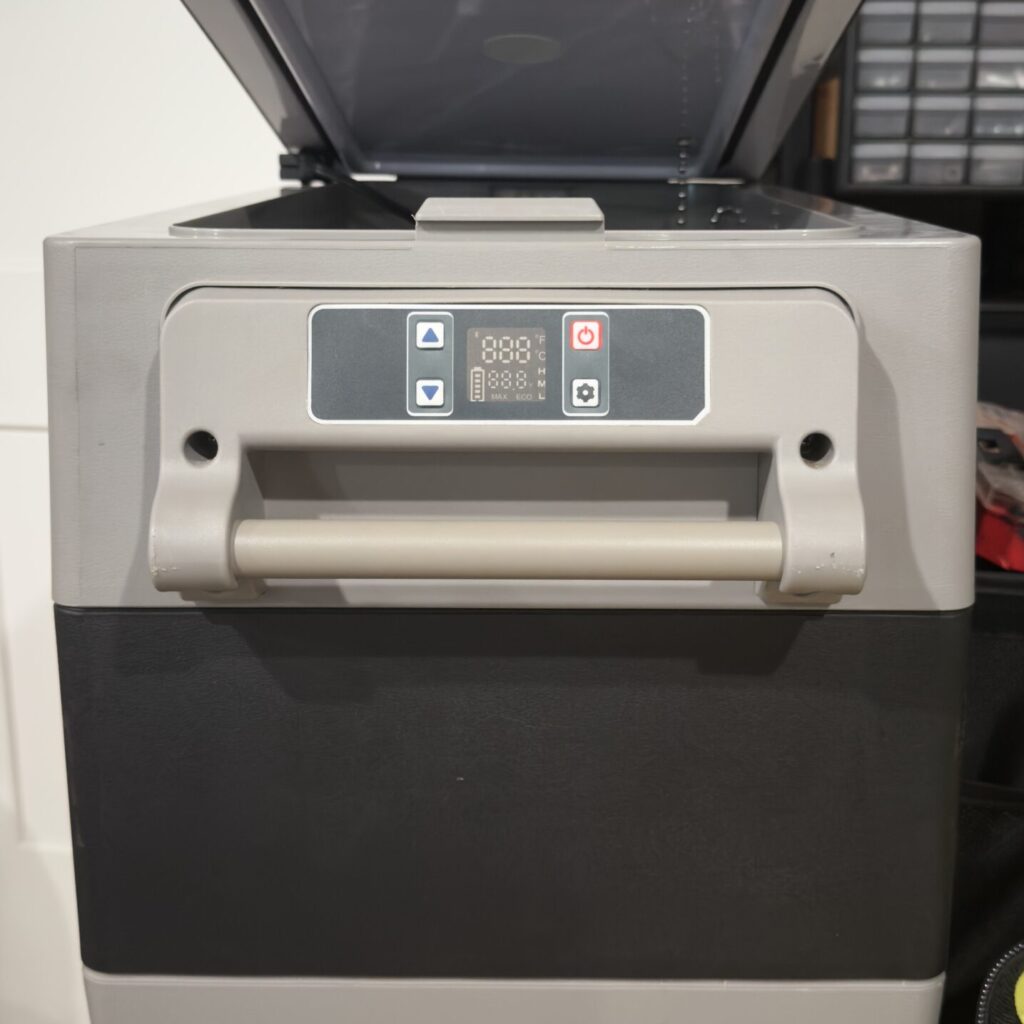
When our built-in fridge and freezer just aren’t enough, we’ve added a portable compressor fridge/freezer we bought on Amazon, which lives on our top bunk — a space we use exclusively for storage. As space frees up in the built-in unit, we move items over from the portable one. It’s been a simple way to add real capacity without giving up livable space in the cab.
On that note, I also practice intermittent fasting on the road. For me that means eating within a set daytime window and skipping food during my night shift. It actually makes meal planning simpler, since I’m prepping fewer meals per day. Curious how that works with this kind of prep? I wrote about it in my post on the benefits of intermittent fasting, and about how it fits my night routine in staying awake and alert.
Thumper and Rocky’s Meals: Raw and Ready, Two Different Ways
Both of our boys are on a predator raw diet, and their meals are as road-ready as ours. But it’s not a one-size-fits-all setup. Thumper is an American Bully and needs a higher fat content to support his size and build. Rocky is a Chiweenie, and his portions are smaller, with less fat, to match his frame.
That difference matters for more than just their waistlines. Both breeds carry long spines, which makes keeping their weight in check essential to their long-term health and mobility — not just a nice-to-have.
I chop and portion each dog’s ingredients separately at home, at the ratios that fit each of them, then vacuum-seal each day’s meals individually for easy management on the road. Their food stays frozen, and I move each day’s portions to the fridge the day before it’s needed — one bag for Thumper, one bag for Rocky, so there’s never a mix-up. For the full breakdown of what goes into their diet and why, check out my post on The Predator Raw Diet for Dogs.
Truck Meal Planning: What Actually Makes This Work
A decade of doing this hasn’t taught me anything you’ll find on a generic checklist — it’s taught me a few specific habits that actually save time and sanity:
- I prep in one long session, not several short ones. Trying to cook a little each day at home before a run just means I’m still cooking when I should be sleeping. One dedicated prep day, right before we head out, beats spreading it thin.
- Vacuum-sealing isn’t optional, it’s the whole system. Between our shoebox freezer and two dogs’ worth of raw food, loose containers just don’t fit. Flat, sealed bags stack like books instead of taking up random shapes of space. Don’t have a vacuum sealer? Double-bagging in ziplock bags works too — I always double up for the dogs’ raw food specifically, since a single bag can spring a leak, and that’s not a mess you want thawing next to your own groceries.
- I plan Thumper and Rocky’s meals before I plan ours. Their portions are exact for a reason — health, not convenience — so I chop and portion theirs first, then build our meals around whatever fridge and freezer space is left.
- Fast food is the fallback, not the plan — but I’m not a robot about it. Truck stops make it easy to skip prepping altogether, so having the food already made removes most of the temptation. That said, if a Bojangles, a Carl’s Jr., or a good Mexican or Middle Eastern spot presents itself, I’m only human.
With a little prep and the right tools, eating well on the road is not only possible but enjoyable — for two people, and for two very different dogs.
Frequently Asked Questions
The short answer: prep everything in one session before leaving, vacuum-seal it flat to save space, and lean on pre-cooked proteins and mix-and-match sides you can reheat quickly. A shoebox-sized freezer forces real discipline about portioning and packaging.
Most semi trucks come with a compact built-in fridge, often with a very small freezer compartment. A soft-sided cooler with ice packs, or a portable compressor fridge/freezer stored on an unused bunk, are both common ways to supplement that limited space on longer trips.
It depends on the dog and the diet you’ve chosen. We run a raw diet for both of our dogs, portioned and vacuum-sealed (or double-bagged in ziplocks) individually at home, with portions and fat content adjusted for each dog’s breed and size.
It can simplify meal planning significantly, since you’re prepping fewer meals per day. It also fits well with irregular shift schedules, like driving overnight. More detail here.
If you’re looking for a carrier that values compliance and treats its drivers right, schedule a call with M2GT and let’s talk about what we can offer you. You can also visit our Owner Operator page for more information.
If you enjoyed this article, please check out our other stories from the road and our Trucking 411 articles — Keep the Shiny Side Up!