
Commercial Vehicle Tire Chains: Options, Types, Laws
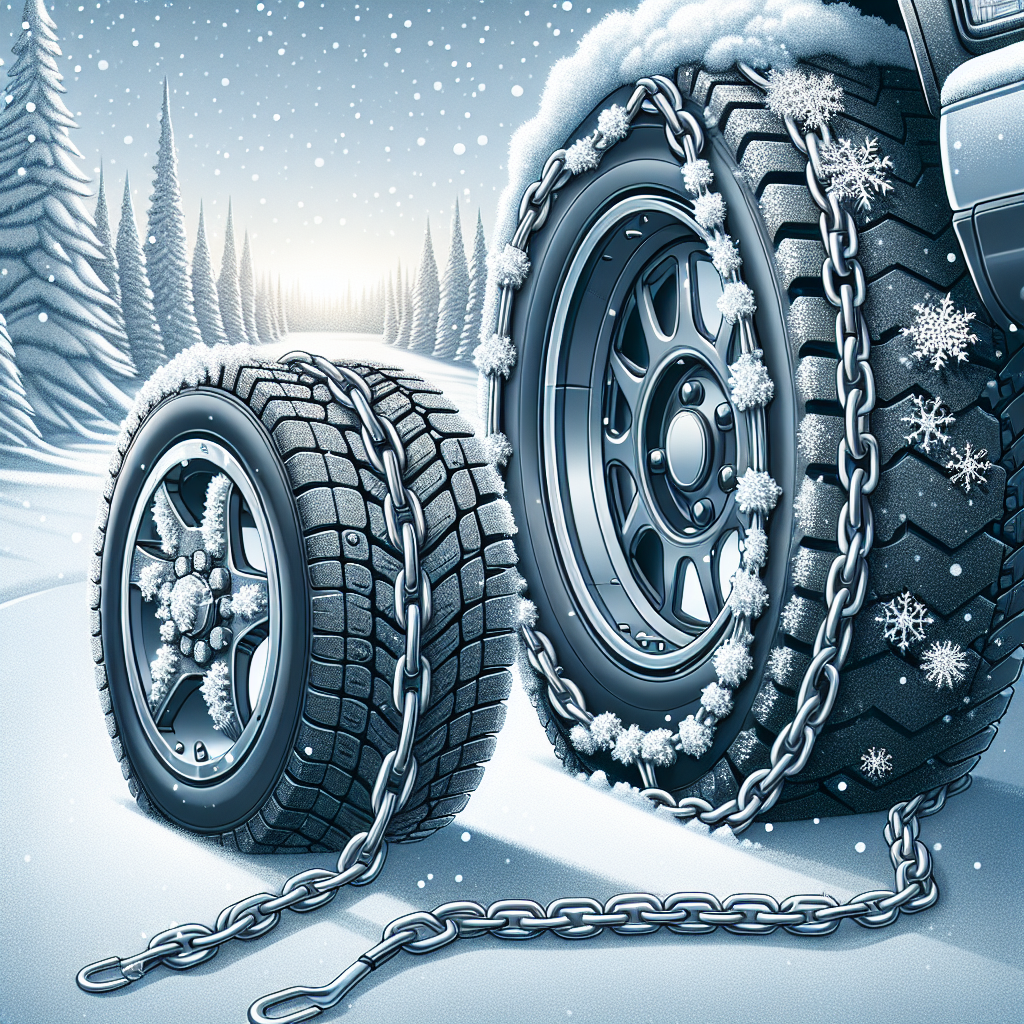
Commercial vehicle tire chain laws vary by state: some require carrying chains all winter (Colorado’s runs September 1 to May 31), others only when posted, and a few ban chains outright. Here’s every type of chain, how many you need and where they go, and the state-by-state laws for 2026–27. Understanding when and where to use truck tire chains involves more than just glancing at the weather forecast. It takes knowing the legal requirements that vary by state, the technology behind the different types of chains, and the wisdom to know when to act. Let’s walk through all three so you’re ready when the roads turn white.
Types of Snow Tire Chains: The Options
There are several types of tire chains, each with its own pros and cons. The right choice depends on the severity of the weather, the type of vehicle you’re driving, and the specific road conditions you’ll encounter. Understanding your options helps you balance safety, legality, and ease of use.
Traditional Commercial Vehicle Tire Chains
The classic choice. Traditional truck tire chains provide excellent traction on ice and snow. They’re durable and reliable, but they’re cumbersome to install, especially in freezing temperatures. Their robust construction makes them ideal for severe winter conditions where maximum traction is essential. Shop around to find the best set for your truck.
Cable Commercial Vehicle Tire Chains
Cable chains are lighter and easier to install than traditional chains. They’re a good option for light to moderate snow, but they may not offer the same traction as their heavier counterparts. For drivers who need a quick, easy solution in less severe conditions, cable chains are a convenient alternative.
Automatic Tire Chains
The set-it-and-forget-it option you’ll see on buses, fire trucks, and some fleets: automatic chain systems (brands like Onspot and Insta-Chain) mount a spinning wheel of short chain segments near the drive tires. Flip a dash switch and the chains swing under the tires while you’re moving — no stopping, no kneeling in the slush. The trade-offs are cost (figure a couple thousand dollars per axle installed) and coverage: they’re designed for packed snow and ice at moderate speeds, not deep snow, and some states’ chain laws don’t accept them as a substitute when full chain-up is ordered. For trucks running regular winter lanes, though, they can dramatically cut chain-up time for the routine activations.
AutoSock
AutoSock is a fabric sock — a textile cover you stretch over the tire by hand. No moving parts, no installation hardware. It qualifies as an alternative traction device under laws like Colorado’s, meaning it can legally stand in for chains in some activations.
Studded Commercial Vehicle Tire Chains
Studded chains are equipped with metal studs that dig into ice for superior grip. They can be harsh on road surfaces and aren’t legal in all states. These are ideal for regions where icy roads are a constant threat, offering unmatched traction, but the potential to damage road surfaces means they must be used with caution and only when permitted by local law (see the state-by-state section below).
Chaining Up vs. Waiting It Out
Now, the heart of the matter: should you chain up or wait out the storm? At Miles 2 Go Transport we recommend waiting it out, and we will never pressure a driver to run in conditions they don’t feel are safe. Our philosophy is simple: chains are for getting you out of trouble, not into trouble. That said, here’s the case for both.
The Argument for Waiting It Out
Waiting out a storm has real merit. If the weather is severe enough, chaining up might not be enough to keep you safe. In those cases, finding a safe place to park and waiting for conditions to improve is the wisest move. This approach prioritizes safety over urgency, and sometimes the best decision is simply to pause and reassess.
Be aware that even if you don’t plan on using chains, some states require you to carry them regardless. We’ve listed the state-by-state laws below, so know before you go.
Chaining up in freezing temperatures and heavy snow is a grueling task. By choosing to wait, you avoid unnecessary risk and reduce the physical and mental strain of driving in extreme conditions.
The Case for Chaining Up
Chaining up can be the smart move if you’re facing a long stretch of icy or snowy road. Chains give you the traction to navigate treacherous conditions relatively safely, and they’re preventative, keeping you from getting stuck, which can be a nightmare in a remote area. For many drivers, chaining up is a proactive measure that offers peace of mind and confidence in challenging weather.
Making the Right Call
In the end, whether to chain up depends on multiple factors: the severity of the weather, the state laws, and your own comfort level driving in adverse conditions.
- Know the laws. Always be aware of the chain laws in the states you’re driving through. Ignorance can cost you in fines and delays.
- Assess the conditions. Evaluate the weather and road before you decide. Sometimes waiting it out is the safer, smarter choice.
- Be prepared. Carry the right chains for your vehicle and know how to install them. Practice in good weather so you’re not caught off guard when the storm hits.
Another key part of being prepared is winterizing your truck before the cold season arrives. So the next time you’re facing a snowy mountain pass, you’ll know exactly what to do.
How Many Chains Do You Need — and Where Do They Go?
The number that matters is your drive tires. Chains do their work where the power meets the road, so the standard commercial setup chains the drive axle(s):
- Colorado requires chains or approved alternative traction devices on at least 4 drive wheel tires when its CMV chain law is active.
- California chain controls generally mean chaining the drive tires plus one set of trailer tires for braking stability — which is why the often-quoted minimum is 8 chains for a standard tractor-trailer to be compliant.
- Steer tires are not chained on a standard tractor — chained steers can grab and dart. Trailer chains (one axle) add braking and tracking stability on grades.
Practical carry advice: a typical team running western winter lanes carries 6 to 8 chains — enough to chain both drive axles plus a trailer axle — along with tensioners (cams or bungees) to keep them snug. Buy chains sized to your tire size (it’s stamped on the sidewall — most linehaul trucks run 295/75R22.5 or 11R22.5), because a loose chain destroys itself and your fender in short order.
Installing Chains Without Losing Your Religion
A few habits that separate a 15-minute chain-up from an hour of misery:
- Practice once in the dry. Your first install should never be on a dark shoulder at 10°F. Lay them out in a parking lot in October and learn your setup.
- Lay the chain over the tire, drape evenly, connect inside first, then outside. Roll forward a half-rotation and re-tension — every chain loosens after the first few feet.
- Use the chain-up areas. States with serious chain laws build pull-outs for exactly this. Chaining on the shoulder of an active lane is how drivers get killed.
- Carry gloves, a headlamp, and a kneeling pad in the same box as the chains. Cold fingers fumble; a headlamp beats holding a phone in your teeth.
- After chaining, keep it under 30 mph. Chains are a get-through-it tool, not a run-the-lane tool. If conditions demand chains for hours of driving, revisit the waiting-it-out section above.
Commercial Vehicle Tire Chain Laws by State
Important: The summaries below were reviewed for the 2026–27 season and are provided for general reference only. State chain laws change, and enforcement varies by road, season, and posted conditions. Always confirm the current law directly with the state’s Department of Transportation before you run. When in doubt, check the state’s official DOT or 511 site, or watch for posted chain-up signs on the road.
Below are tire chain laws for commercial vehicles by state, with links where available for easy reference.
Alabama (AL), Arizona (AZ), Illinois (IL), Indiana (IN), Iowa (IA), Kansas (KS), Louisiana (LA), Michigan (MI), Minnesota (MN), Mississippi (MS), Nebraska (NE), New Hampshire (NH), New Jersey (NJ), New Mexico (NM), North Carolina (NC), Oklahoma (OK), Pennsylvania (PA), Rhode Island (RI), South Carolina (SC), South Dakota(SD), Tennessee (TN), Texas (TX), Virginia (VA) – Allowed when required due to snow, rain, or other poor weather conditions.
Arkansas (AR) – Allowed during certain times of year when required due to snow, rain, or other poor weather conditions.
California (CA) – Tire chain controls may be established in mountain areas. Follow posted signs along the highway. At least eight chains are needed to comply with regulations.
Colorado (CO) – Updated law — read closely. Colorado’s “Must Carry Law” (effective September 1, 2024) requires all CMVs over 16,000 lbs GVWR/GCWR to carry chains from September 1 to May 31 on covered routes — over 1,400 centerline miles including the full I-70 mountain corridor, with 130 designated chain stations. When the CMV chain law is activated, chains or CDOT-approved alternative traction devices are required on at least 4 drive wheel tires. Fines run $500 for failing to carry and $1,000+ for blocking a roadway without chains, and local ordinances can be stiffer (Vail fines $1,500 for missing chains and $2,650 for spinning out without them). More than 1,300 citations were issued in the 2024–25 season alone — this one is actively enforced.
Connecticut (CT) – Chains and studded tires may be used November 15 to April 30.
Delaware (DE) – Chains are allowed when needed from October 15 to April 15.
Florida (FL) – No tire chain laws.
Georgia (GA) – Tire chains required when posted on signage.
Idaho (ID) – Studded tires allowed October 1 to April 30. Chains are allowed as needed and required on some mountain passes.
Kentucky (KY) – May not be used unless the road is ice-covered or the vehicle has an ice shoe at least 6 inches wide. Limit on diameter and spacing.
Maine (ME) – Allowed when required during certain times of year due to snow, rain, or other poor weather conditions. Studs, wires, and spikes are otherwise prohibited from May 1 to October 1.
Maryland (MD) – Required when a snow emergency has been declared, but not allowed on vehicles weighing more than 10,000 lbs.
Massachusetts (MA) – Permitted when necessary, from November 1 to May 1.
Missouri (MO) – Allowed when required due to snow, rain, or other poor weather conditions. Not permitted April 1 to November 1.
Montana (MT) – Chains may be required when a chain-up sign is posted. Vehicles are required to carry tire chains October 1 to April 1 when indicated.
Nevada (NV) – Required on all vehicles over 10,000 pounds when posted.
New York (NY) – Allowed when required October 16 to April 30.
North Dakota (ND) – Studded tires allowed between October 15 and April 15. Otherwise, tire chains are allowed when required due to snow, rain, or other poor weather conditions.
Ohio (OH) – Studded tires allowed between November 1 and April 15. Tire chains are not allowed.
Oregon (OR) – Allowed when required due to snow, rain, or other poor weather conditions. Follow posted signs for usage requirements.
Utah (UT) – Allowed October 1 to April 30, when posted or when road conditions warrant it.
Vermont (VT) – Allowed when required due to snow, rain, or other poor weather conditions. Required in certain areas when posted.
Washington (WA) – Required on certain routes from November 1 to April 1. Check local laws and use chains when required.
West Virginia (WV), Wisconsin (WI) – Allowed when required due to snow, rain, or other poor weather conditions. Chains must not come in direct contact with the road surface.
Wyoming (WY) – Allowed when required due to snow, rain, or other poor weather conditions. Chains may be required in extreme weather conditions.
Disclaimer: Always consult official state transportation department websites for the most up-to-date and specific information. Laws and enforcement change, and this list is a starting point, not legal advice.
Enough to chain your drive tires, plus spares: Colorado requires chains on at least 4 drive wheel tires when its chain law is active, and California’s chain controls effectively require 8 chains for a standard tractor-trailer (drives plus one trailer axle). Most drivers running western winter lanes carry 6 to 8 chains with tensioners.
Colorado has the strictest carry requirement — all CMVs over 16,000 lbs must carry chains September 1 to May 31, with $500 fines for failing to carry. Montana requires carrying chains October 1 to April 1 when indicated, and states like California, Washington, Oregon, Utah, and Wyoming require chains when posted or when conditions warrant. Always verify with the state DOT before you run.
It depends on the state and the activation level. Cables are lighter and easier to install, but some chain laws don’t accept them when full chain-up is ordered — Colorado’s Level 1 commercial chain law, for example, requires actual chains on drive wheels and doesn’t permit cables as a substitute. Carry real chains if your lanes cross serious chain-law states.
September 1 through May 31. During that window, every commercial vehicle over 16,000 lbs on covered routes must carry chains whether or not any chain law is active — and when CDOT activates the CMV chain law, chains or approved traction devices go on at least 4 drive tires.
No — on a standard tractor, chains go on the drive tires (and often one trailer axle for braking stability), never the steers. Chained steer tires can grab unpredictably and make the truck dart. Automatic chain systems and drive-tire setups all follow the same principle: traction where the power is.
Our philosophy at M2GT: chains are for getting you out of trouble, not into trouble. If conditions are bad enough that you’d need chains for hours of driving, the safer and smarter move is usually parking and waiting it out. Chain up to reach safe parking, to clear a required stretch, or to get unstuck — not to keep pushing through a storm.
If you’re looking for a carrier that values compliance and treats its drivers right, schedule a call with M2GT and let’s talk about what we can offer you. You can also visit our Owner Operator page for more information.
If you enjoyed this article, please check out our other stories from the road and our Trucking 411 articles — Keep the Shiny Side Up!